Clicker Training: A Beginner's Guide
A clicker marks the exact moment your dog does something right. How to start, and whether you need one at all.
This guide contains affiliate links. If you buy through them we may earn a small commission at no cost to you. Details.
A clicker is a small device that makes a consistent "click" sound. It works as a marker: it tells your dog "that's exactly what earned the reward." Because the sound is instant and always the same, it makes timing precise. Training clickers
Do you need a clicker?
No. A short, consistent word like "yes!" works the same way, and it's always with you. Clickers can be especially helpful for precise behaviors and tricks, and for trainers whose voice tends to vary. Pick one and be consistent.
Step 1: Charge the clicker
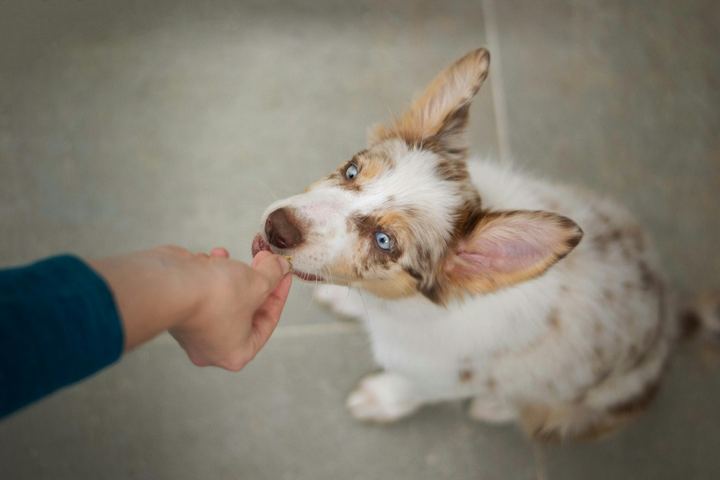
- Click, then immediately give a treat. Don't ask for anything.
- Repeat 15–20 times.
- Test it: when your dog is looking away, click. If they turn toward you expecting a treat, they've got it.
Step 2: Click the behavior
- Click the moment the behavior happens, not after. If you're teaching sit, click as their bottom touches the floor.
- Always follow a click with a treat, even if you clicked by mistake.
- The click ends the behavior. It's fine if your dog gets up after a click to get the treat.
Step 3: Capture and shape
- Capturing: click and treat behaviors your dog already does, like lying down or looking at you.
- Shaping: click small steps toward a bigger goal. For "go to your bed": click looking at the bed, then a step toward it, then a paw on it, then all four paws, then lying down.
Tips
- Hold treats in the other hand or a treat pouch so you're ready.
- If your dog is sound-sensitive, muffle the clicker in a pocket or use a quieter one, or use a word.
- Keep sessions short: 3–5 minutes.
Next: teach tricks, where clickers really shine.
This guide is general information, not veterinary advice. If your dog is sick, hurt or acting unusually, call your veterinarian.