Helping a Dog Who's Scared of Fireworks and Thunder
Noise fear is common and real. How to help your dog through the night, and how to reduce the fear long-term.
This guide contains affiliate links. If you buy through them we may earn a small commission at no cost to you. Details.

Many dogs are frightened of fireworks and thunderstorms. Signs include trembling, panting, pacing, hiding, drooling, clinging to you, trying to escape or having accidents. It's genuine fear, and it often gets worse each year without help.
On the night
- Walk your dog early, before dark, and keep them on leash. Frightened dogs bolt; make sure ID tags and microchip details are up to date.
- Close windows and curtains and turn on background noise: TV, music or a fan.
- Create a safe den: a covered crate (door open) or a quiet room with their bed.
- Comfort your dog if they want it. You can't reinforce fear by comforting a scared dog.
- Let them hide if they prefer. Don't drag them out.
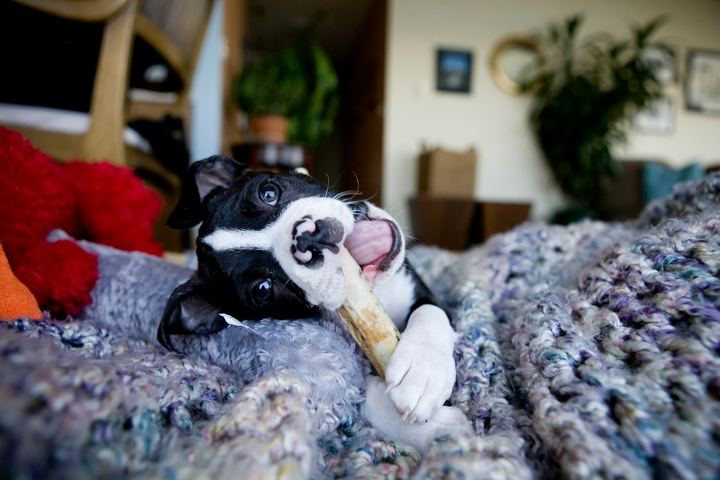
- Offer a long-lasting chew or lick mat if they'll eat. Lick mats
- Stay home if you can.
Some dogs find a snug-fitting anxiety wrap helpful. Anxiety wraps
Talk to your vet before the next event
Vets can prescribe medications to reduce noise fear for specific events. They work best given before the noise starts. Ask well ahead of the holidays. Never give human sedatives.
Long-term: change the feeling
Desensitization and counter-conditioning can reduce noise fear over time:
- Play a recording of fireworks or thunder at a very low volume, so low your dog doesn't react.
- Pair it with great things: treats, play or meals.
- Over many sessions, raise the volume very slowly, staying below the level that worries your dog.
- Stop at the first sign of stress and go back a step.
Start months before fireworks season. Puppies benefit from gentle exposure as part of socialization.
This guide is general information, not veterinary advice. If your dog is sick, hurt or acting unusually, call your veterinarian.